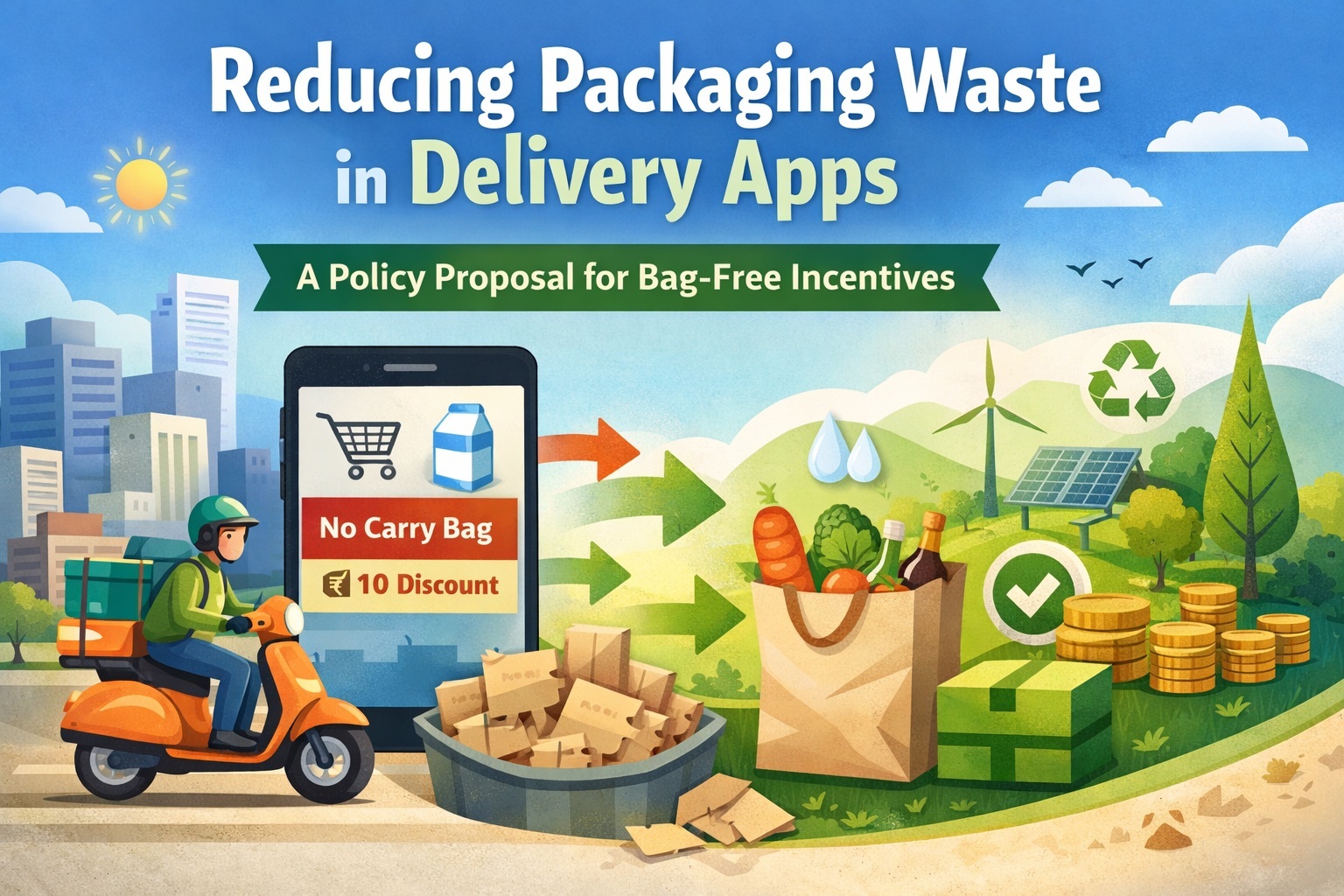
Introducing a “No Carry Bag – Get Discount” Option at Checkout to Reduce Packaging Waste
1. Background and Rationale
Quick commerce and delivery platforms have transformed urban consumption patterns by offering unmatched convenience. However, an unintended environmental concern has emerged – the routine use of carry bags, even for small or single-item orders.
Customers frequently receive paper carry bags for ordered items such as milk packets, medicines, snacks, a single grocery refill, other lightweight packaged goods etc.
In many cases, especially in residential societies and repeat daily orders, these bags are discarded immediately. While paper bags are considered more environmentally friendly than plastic, they still contribute to:
- Tree consumption
- High water usage during manufacturing
- Carbon emissions
- Increased solid waste generation
Sustainability should focus not only on material substitution but also on eliminating unnecessary usage.
2. Proposed Solution
Introduce an Optional “No Carry Bag – Get Discount” Feature at Checkout
At the checkout page, include a clearly visible option:
✅ I do NOT require a carry bag – I choose bag-free delivery
If selected:
- The customer will receive a discount of ₹10 (or any amount decided by the respective company) on the total bill.
- The order will be delivered safely without an additional carry bag, wherever technically feasible.
- A confirmation message may be displayed:“Thank you for choosing bag-free delivery. You just earned ₹10 for supporting sustainability.”
The discount amount can vary based on each company’s operational cost structure.
3. Environmental Impact
If a large platform processes approximately 5 lakh orders daily and even 20% of customers opt for bag-free delivery:
- 1 lakh bags saved per day
- Over 36 million bags saved annually
When implemented collectively across platforms such as Blinkit, Zomato, Flipkart Minutes, Amazon Now, Swiggy Instamart, and others, the environmental impact becomes substantial.
4. Advantages for Companies
1. Strong ESG Positioning
Demonstrates leadership in environmental responsibility and sustainability reporting.
2. Positive Brand Image
Positions the platform as environmentally conscious and socially responsible.
3. Consumer Engagement
Encourages mindful consumption and builds emotional brand loyalty.
4. Cost Optimization
Reduced procurement and logistics weight where applicable.
5. Alignment with Government Sustainability Goals
This initiative aligns with:
- Waste reduction targets
- Sustainable packaging policies
- Extended Producer Responsibility frameworks
Marking this proposal to relevant environmental authorities may encourage policy support, incentives, or broader industry adoption.
6. Implementation Guidelines
- Default setting: Bag included
- Customer must actively opt for bag-free delivery
- Fragile, liquid, or heavy orders may be excluded
- Multi-item bulky orders may automatically require packaging
- App may provide monthly sustainability reports such as:“You saved 14 bags this month.”
Gamification elements such as green badges or sustainability scores can further enhance participation.
7. Conclusion
This is a simple technological modification with potentially massive environmental impact. True sustainability lies in reducing unnecessary consumption – not merely replacing materials. By introducing a “No Carry Bag – Get Discount” option, quick commerce and delivery platforms can lead India toward responsible digital commerce innovation while rewarding conscious consumers.
Proposed by:
Dr Subodh Kumar
PhD. (Psychology), M.Tech (CSE) – Gold Medalist
Author – Believe It Or Not, But It Happens
Project Director & Cognitive Psychologist,
VataVriksh Senior Care, Gurgaon