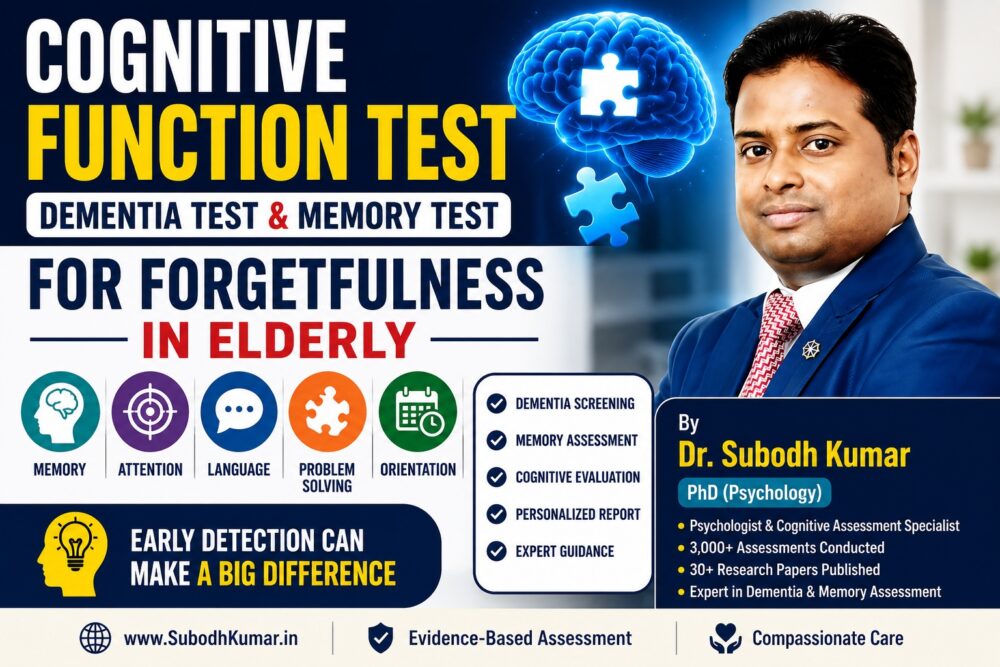
Cognitive Function Test: Understanding Your Brain Before Problems Become Serious
Our brain is the control centre of everything we do—remembering loved ones, making decisions, communicating, solving problems, and living independently. When these abilities begin to decline, even subtly, they can affect every aspect of life.
Many people assume that forgetfulness is simply a part of growing older. While occasional memory lapses are common, persistent changes in memory, attention, or thinking deserve professional evaluation.
A Cognitive Function Test is one of the most valuable tools for identifying cognitive changes early. It helps determine whether memory concerns are related to normal ageing, Mild Cognitive Impairment (MCI), depression, medication effects, or neurodegenerative disorders such as dementia or Alzheimer’s disease. Cognitive screening is an important first step, but it is not by itself a diagnosis.
As a psychologist specializing in cognitive assessment and psychotechnology, I have had the privilege of assessing thousands of individuals and helping families understand cognitive health through evidence-based psychological evaluation.
What is a Cognitive Function Test?
A Cognitive Function Test is a standardized psychological assessment designed to evaluate how effectively the brain performs different mental functions.
The assessment examines multiple domains, including:
- Memory
- Attention and concentration
- Learning ability
- Executive functioning
- Language
- Visual-spatial abilities
- Processing speed
- Orientation
- Problem-solving
- Cognitive flexibility
Rather than measuring intelligence, these assessments identify areas where cognitive functioning may have changed and provide valuable information for further clinical decision-making.
Why is Early Cognitive Assessment Important?
Brain disorders usually develop gradually.
Many people notice small warning signs months or even years before significant impairment becomes obvious.
Early assessment helps:
- Detect cognitive decline before it significantly affects daily life
- Differentiate normal ageing from disease-related changes
- Identify reversible causes of memory problems
- Support timely medical intervention
- Guide cognitive rehabilitation
- Help families plan future care
- Reduce uncertainty and anxiety
Early diagnosis often allows individuals to remain independent for longer while receiving appropriate medical and psychological support.
Common Symptoms That Should Never Be Ignored
You should consider a professional Cognitive Function Test if you or your loved one experiences:
- Frequently forgetting recent conversations
- Asking the same questions repeatedly
- Misplacing belongings regularly
- Difficulty remembering appointments
- Trouble finding familiar words
- Difficulty concentrating
- Problems managing finances
- Confusion about dates or places
- Difficulty following conversations
- Reduced decision-making ability
- Personality or behavioural changes
- Increased dependence in everyday activities
If these symptoms continue or worsen over time, professional assessment is recommended.
Forgetfulness in Elderly: Normal Ageing or Dementia?
One of the most common questions families ask is:
“Is this normal ageing, or could it be dementia?”
Normal Ageing
People may occasionally:
- Forget names but remember them later
- Misplace glasses or keys
- Take longer to learn new information
These changes usually do not interfere with daily functioning.
Possible Cognitive Impairment
Persistent symptoms such as:
- Repeating conversations
- Forgetting important events
- Getting lost in familiar places
- Difficulty completing familiar tasks
- Poor judgement
- Increasing confusion
may indicate Mild Cognitive Impairment or dementia and should be evaluated by a qualified professional.
What Causes Memory Problems?
Memory difficulties are not always caused by Alzheimer’s disease.
Common causes include:
- Normal ageing
- Mild Cognitive Impairment (MCI)
- Alzheimer’s disease
- Vascular dementia
- Parkinson’s disease
- Depression
- Anxiety disorders
- Sleep disorders
- Vitamin B12 deficiency
- Thyroid disorders
- Medication side effects
- Stroke
- Head injury
Because many of these conditions are treatable, professional evaluation is extremely important.
What Happens During a Cognitive Function Assessment?
Every assessment begins with understanding the individual—not just the test scores.
Clinical Interview
The assessment includes discussion about:
- Medical history
- Family history
- Current symptoms
- Education
- Occupation
- Daily activities
- Lifestyle
- Emotional wellbeing
Standardized Cognitive Assessment
Depending on the individual’s needs, commonly used tools include:
- Montreal Cognitive Assessment (MoCA)
- Mini-Mental State Examination (MMSE)
- Addenbrooke’s Cognitive Examination (ACE-III)
- Trail Making Test (TMT)
- Clock Drawing Test
- Functional Assessment Scales
Each assessment measures different cognitive abilities and contributes to a comprehensive understanding of brain functioning.
What Can a Cognitive Function Test Detect?
A professional assessment may help identify:
- Mild Cognitive Impairment (MCI)
- Dementia
- Alzheimer’s disease
- Executive dysfunction
- Attention deficits
- Memory impairment
- Language problems
- Depression-related cognitive changes
- Functional decline
The findings help determine whether further neurological or medical evaluation is required.
Benefits of Professional Cognitive Assessment
A comprehensive evaluation provides:
Accurate Baseline Assessment
Establishes current cognitive functioning for future comparison.
Early Identification
Detects subtle cognitive decline before major disability develops.
Personalized Recommendations
Provides individualized guidance based on the person’s strengths and weaknesses.
Better Care Planning
Helps physicians, psychologists, and caregivers coordinate treatment.
Improved Quality of Life
Supports interventions that help maintain independence and wellbeing.
Who Should Consider a Cognitive Function Test?
Professional cognitive assessment is recommended for:
- Adults over 60 years with memory concerns
- Individuals with a family history of dementia
- Patients with Parkinson’s disease
- Stroke survivors
- Individuals experiencing increasing forgetfulness
- Older adults with depression
- People with diabetes or hypertension who notice cognitive changes
- Anyone whose family has observed changes in thinking or behaviour
Can Cognitive Decline Be Slowed?
Although not every condition can be prevented, research supports several healthy lifestyle practices that promote brain health.
These include:
- Regular physical exercise
- Healthy diet
- Good sleep
- Social engagement
- Mental stimulation
- Reading
- Learning new skills
- Blood pressure control
- Diabetes management
- Stress reduction
- Avoiding tobacco
- Limiting alcohol
Brain health is influenced by both physical and psychological wellbeing.
Frequently Asked Questions
Is a Cognitive Function Test painful?
No.
The assessment consists of interviews, paper-and-pencil tasks, and structured psychological tests.
How long does the assessment take?
Screening assessments generally require 15–30 minutes.
Comprehensive cognitive evaluations may take longer depending on the individual’s condition.
Can one test diagnose dementia?
No.
Diagnosis requires integration of clinical history, cognitive assessment, neurological examination, laboratory investigations, and sometimes brain imaging.
Is forgetfulness always Alzheimer’s disease?
No.
Many medical and psychological conditions can affect memory, including depression, thyroid disorders, vitamin deficiencies, medications, stress, and sleep problems.
About Dr Subodh Kumar
Dr Subodh Kumar is a Psychotechnologist, psychologist, researcher, educator, and cognitive assessment specialist with expertise spanning psychology and computer science. His work focuses on integrating scientific assessment methods with technology to improve mental healthcare and cognitive wellbeing.
Over the course of his professional career, Dr Kumar has:
- Conducted 3,000+ psychological and cognitive assessments
- Published 30+ peer-reviewed research papers
- Guided 50+ postgraduate dissertations
- Empowered 2,000+ students through teaching and mentoring
- Authored educational articles and books on psychology and mental health
- Worked extensively in cognitive assessment, dementia care, and elderly mental health
Areas of Expertise
- Cognitive Function Assessment
- Dementia Screening
- Neuropsychological Assessment
- Memory Assessment
- Elderly Mental Health
- Alzheimer’s Disease
- Psychological Rehabilitation
- Psychotechnology
Why Choose Dr Subodh Kumar?
When you choose Dr Subodh Kumar for a cognitive assessment, you receive:
- Comprehensive evidence-based cognitive evaluation
- Standardized internationally recognized assessment tools
- Personalized psychological assessment report
- Practical recommendations for patients and caregivers
- Guidance regarding further medical evaluation when required
- Ethical, compassionate, and scientifically informed care
Book a Cognitive Function Assessment
Concerned About Memory Problems?
Early identification can make a meaningful difference.
If you or a loved one is experiencing forgetfulness, difficulty concentrating, confusion, or changes in thinking, seeking professional evaluation is an important first step.
A comprehensive cognitive assessment can help identify cognitive strengths and weaknesses, clarify whether further medical investigation is needed, and provide practical recommendations for maintaining cognitive health.
To learn more about cognitive assessment services or schedule an appointment, connect on WhatsApp.
Final Thoughts
The brain deserves the same attention as the heart, lungs, or any other vital organ.
Ignoring persistent memory changes may delay opportunities for early intervention and support. A professional Cognitive Function Test provides valuable information that can help individuals, families, and healthcare professionals make informed decisions.
Whether your goal is reassurance, early detection, or comprehensive cognitive evaluation, timely assessment is one of the best investments you can make in lifelong brain health.